# Getting Started

## Searching for Images

Navigate through our pillars—**Photos**, **Illustrations**, and **3D**—to explore our library. Use the search bar to find specific visuals and refine your results with powerful filters:

### **Color**

Match your palette with precision directly from the search bar. Select a color from the palette, or copy-paste your hex-code.

<figure><img src="/files/mYXvMus1KdRVSJC8Pmge" alt=""><figcaption><p>Select the palette icon in the search bar to open the color search feature.</p></figcaption></figure>

### **Filters**

**Number of People**

Need a group shot or solo focus? Select the **Number of people** filter from the **Tools and Effects** menu in the top left of the image grid. You can even filter out people entirely.&#x20;

**Lighting Style**

You can also adjust to filter images by bright, dark, or neutral lighting from the tools and effects menu.&#x20;

<figure><img src="/files/e4WhHb8LjxVu1mH2foA2" alt=""><figcaption><p>Select other filters from the <strong>Tools and Effects</strong> menu.</p></figcaption></figure>

{% hint style="info" %}

## Find Similar

If a image catches your eye, you can discover similar images by selecting the image and scrolling down to **Similar images**. You can view similar by **Subject** or by **Vibes**.&#x20;
{% endhint %}

## Your Profile

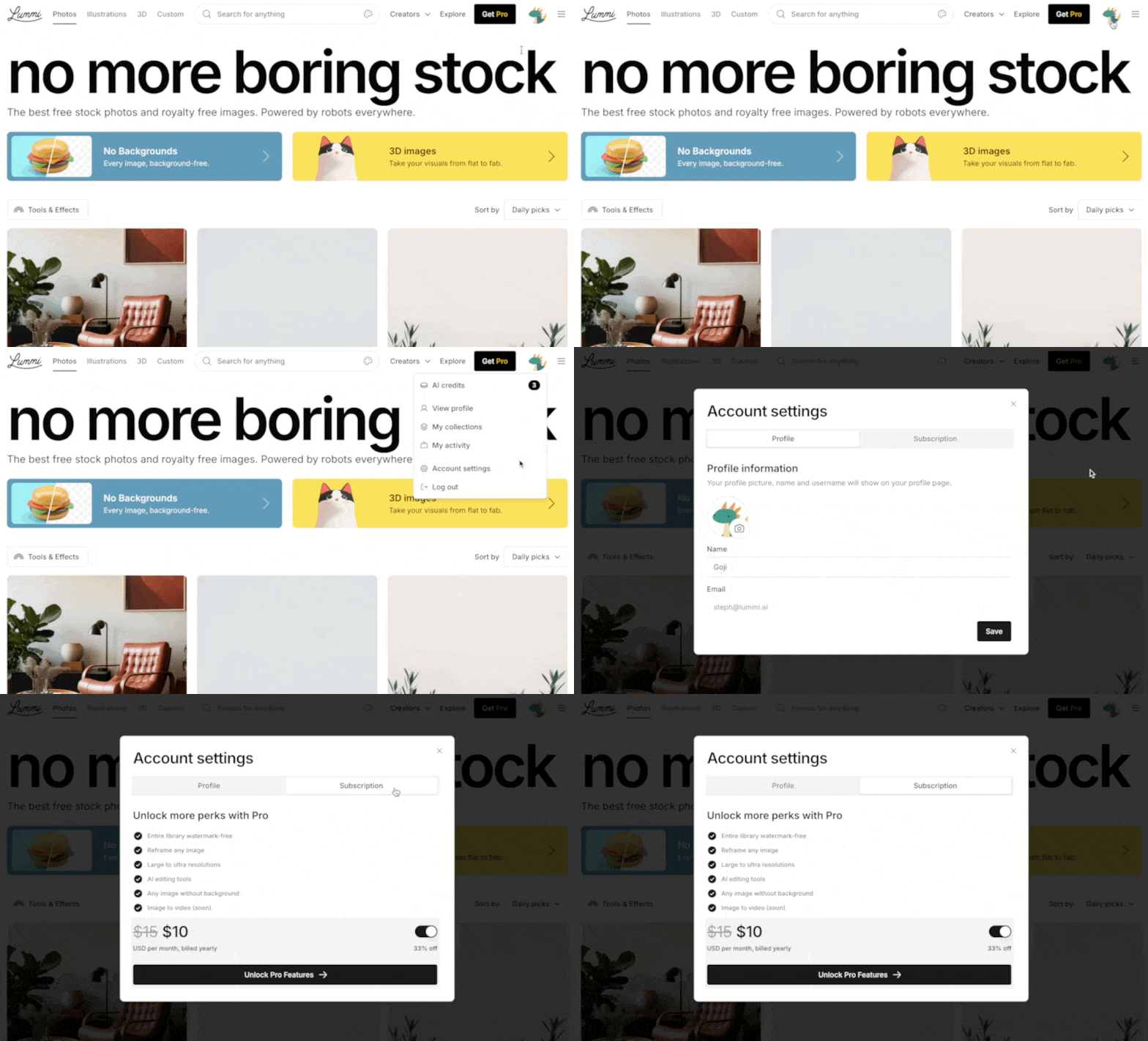
Your profile isn’t just your Lummi home base; it’s your creative hub. Most profile features can be found by selecting your profile picture in the top right. Here’s what you can manage:

### **Account Settings**

Personalize your account, and manage your subscription.&#x20;

<figure><img src="/files/XQ44ypmZvuiVPBM6VkiE" alt=""><figcaption><p>Select Account Settings by clicking on your profile picture.</p></figcaption></figure>

You can personalize your profile image, change your display name or Lummi handle, add a bio and set up links to your social accounts. **If you need to update your profile email address, please contact Lummi support.**&#x20;

### **Activity Log**

Track all of your downloads and retouches so you can quickly find them if you need to download them again. This is a **private feature** and can't be viewed by other Lummi users.&#x20;

<figure><img src="/files/zbGEP3HBgmF2suqbKSAj" alt=""><figcaption><p>Your account activity log found in your Lummi profile. </p></figcaption></figure>

### **Collections**

Create, save and manage your saved groups of images.&#x20;

<figure><img src="/files/xk3h4mZu45WNh9nPVsJM" alt=""><figcaption><p>You can view a Lummi user's collections from their profile page.</p></figcaption></figure>

{% hint style="success" %}
Selecting the ♡ heart icon in the top right of an image will save them directly to your **Favorites** collection.
{% endhint %}

Read on to learn more about collections! 👇

## Collections

Save, organize and share favorite images with **Collections**.

With a **free account**, you can:

* Create unlimited collections.
* Add or remove images anytime.
* Edit collection names and descriptions.
* Make collections private when needed.

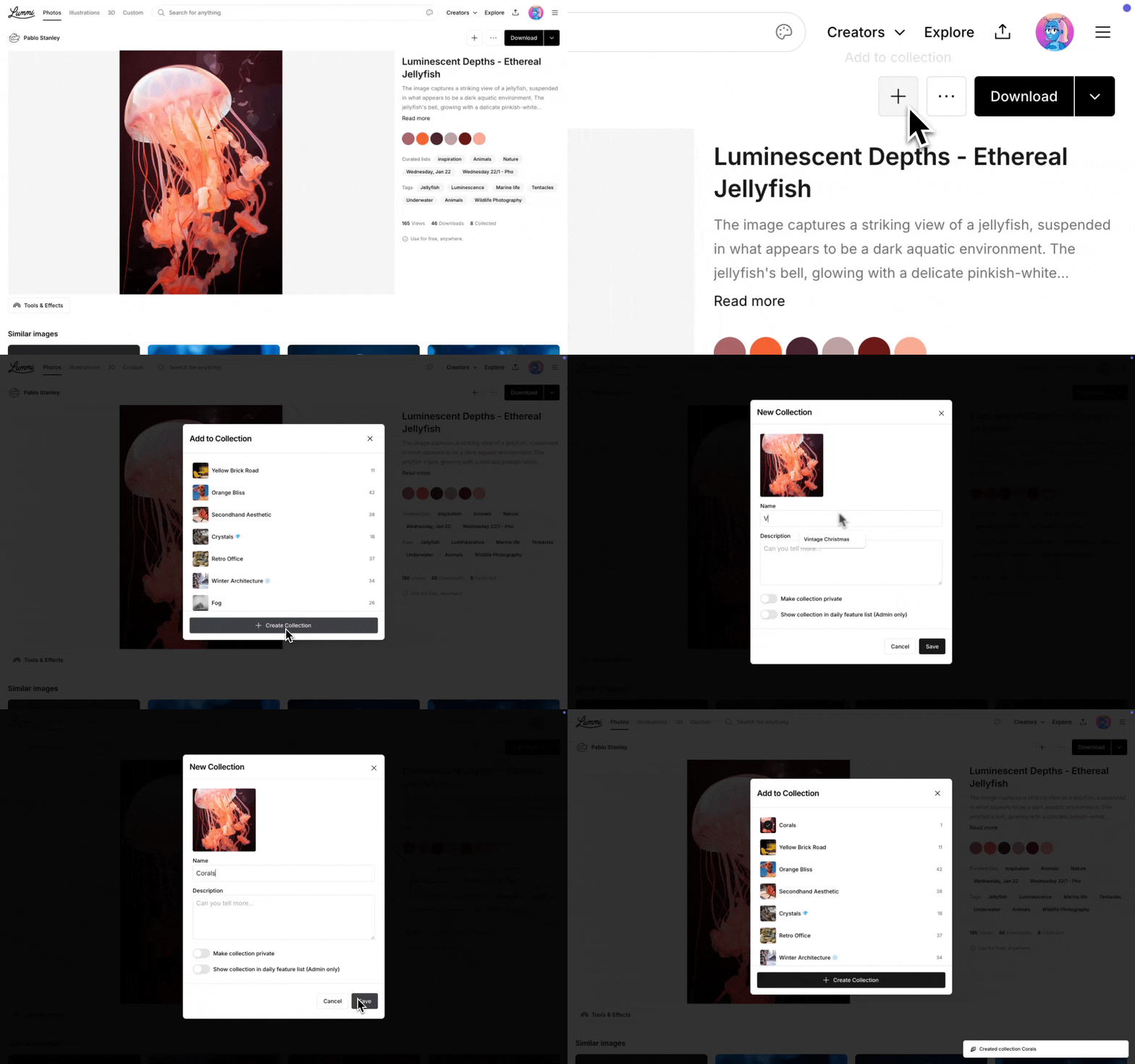
The quickest way to create a collection is by opening an image and clicking on the **+** button. You can select an existing collection from the list or create a new one.

<figure><img src="/files/PDZqlgprRtA6rAIxaCoD" alt=""><figcaption><p>Create a new collection by selecting the + button next to an image you love. </p></figcaption></figure>

{% hint style="info" %}
Your collections will be **public** by default, but you can choose to make them private by toggling on **Make collection private** when you make the collection. Private collections cannot be viewed by anyone but you. You can update a collection's privacy settings at any time.&#x20;
{% endhint %}


---

# Agent Instructions: Querying This Documentation

If you need additional information that is not directly available in this page, you can query the documentation dynamically by asking a question.

Perform an HTTP GET request on the current page URL with the `ask` query parameter:

```
GET https://docs.lummi.ai/about-lummi/welcome-to-lummi-ai/getting-started.md?ask=<question>
```

The question should be specific, self-contained, and written in natural language.
The response will contain a direct answer to the question and relevant excerpts and sources from the documentation.

Use this mechanism when the answer is not explicitly present in the current page, you need clarification or additional context, or you want to retrieve related documentation sections.